Here's the full lecture given by Elon Musk at Yale University on October 14, 2010, on the importance of making life multiplanetary.
— ELON NEWS & INTERVIEWS (@MuskBreaking) May 4, 2024
Timestamps:
00:06 A decisive step for life itself
04:03 Falcon 1 & 9, getting to orbit
08:25 Launch videos & simulation: Falcon 1, 9 & Dragon… https://t.co/gv8kHWMVVp pic.twitter.com/9d0dyuFShD
Astronauts arrive at Kennedy Space Center as first crew for Boeing’s Starliner spacecraft
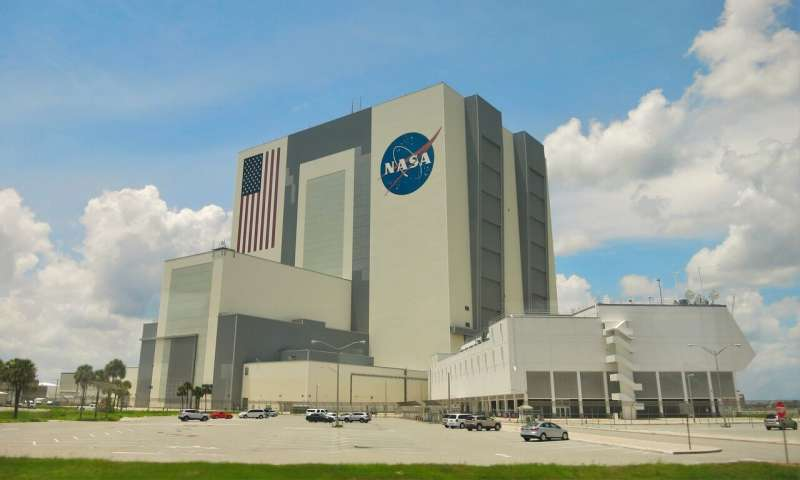
by Richard Tribou, Orlando Sentinel
It’s not just another ride for a pair of veteran NASA astronauts who arrived to the Space Coast ahead of their flight onboard Boeing’s CST-100 Starliner.
Barry “Butch” Wilmore and Sunita “Suni” Williams, who both joined NASA’s astronaut corps more than two decades ago, will be the commander and pilot for the Crew Flight Test mission of the much-delayed spacecraft.
It’s set to launch with humans on board for the first time atop an Atlas V rocket from Cape Canaveral Space Force Station’s Space Launch Complex 41 on May 6 at 10:34 p.m., headed to the International Space Station.
The pair flew into KSC in their T-38 jets, landing at the former space shuttle landing facility Thursday afternoon and speaking with reporters ahead of the vanguard mission.
“This mission going off well? Of course we want it to do that,” said Wilmore from the tarmac. “Do we expect it to go perfectly? This is the first human flight of the spacecraft. I’m sure we’ll find things out. That’s why we do this. This is a test flight. When you do test, you expect to find things. And we expect to find things.”
Wilmore, who was part of NASA’s 2000 astronaut class, was the pilot for STS-129 on board Space Shuttle Atlantis for an 11-day mission in 2009 and then stayed on board the ISS for nearly five months from 2014–2015. Williams was part of NASA’s 1998 astronaut class and had two long-term stays on board the ISS, first flying in 2006 on Space Shuttle Discovery on STS-116 and flying home on Space Shuttle Atlantis on STS-117 in 2007 after 192 days in space. She then flew on a Soyuz in 2012 for a four-month stay on board.
This is the third trip to space for both, but the pair are not resting on their laurels with 11 days to go before launch. Wilmore said the coming days could be summed up in three words.
“Review, review, and review—everything we’ve been working on. There’s so much into this, there’s a fair amount of responsibility, obviously, that we hold,” he said. “We are ready. But we want to stay ready. We’ve got a week to continue to make sure that there’s not a single event that we have prepared for that we’re not ready for.”
This marks only the sixth new U.S.-based spacecraft to carry humans following Mercury, Gemini, Apollo, the space shuttle and the most recent entrant, SpaceX’s Crew Dragon. Dragon’s first human spaceflight came nearly four years ago, launching May 30, 2020, with its own pair of veteran NASA astronauts, Bob Behnken and Doug Hurley.
Williams said she got a pep talk from Behnken.
“I just got a text from Bob last night, and he was pretty pumped that we were coming down here. He was like, “I’m reliving it in my mind where we were,'” she said. “He gives us his best and is ready for us to go fly.”
SpaceX and Boeing had been running fairly close in development at the end of the last decade as one of two companies NASA awarded contracts for under its Commercial Crew Program. The goal of the program was to replace U.S.-based flights after the end of the Space Shuttle Program in 2011, which forced a reliance on Russia for flights to the ISS on board Soyuz spacecraft.
Starliner, though, ran into trouble on its first uncrewed test flight in December 2019 and was not able to rendezvous with the ISS, forcing a major overhaul of Boeing’s program including hardware, software and management changes. That led to the successful redo of that uncrewed test flight in 2022, but further hardware delays have now made it so next month’s planned launch will come more than four years behind schedule.
Since then, SpaceX has proceeded full bore, having now flown 50 humans to space onboard its fleet of four Crew Dragon spacecraft on 13 missions, and has three more on the schedule to fly before the end of the year.
Wilmore said Starliner took longer, but it’s time.
“We’ve had a few delays because we weren’t ready,” he said. “There are literally 1,000 events that are taking place simultaneously as you step up and get prepared to launch and during the launch sequence, and then the spacecraft itself when we’re on orbit.”
But he’s adamant all the parts are in place.
“There’s so much going on. It is not easy. I think we make it look easy. That’s our goal,” he said. “We want the general public to think it’s easy, but it’s not. It’s way hard. We wouldn’t be here if we weren’t ready. We are ready. The spacecraft’s ready. And the teams are ready.”
Boeing’s CFT mission now aims for about an eight-day stay on board the ISS. The major goals for its crew are to test out both docking backup systems on approach and landing operations when it heads back to Earth, which will feature a parachute-assisted touchdown in the western U.S., unlike the watery splashdowns off the Florida coast taken by SpaceX’s Crew Dragon.
If successful, it lines Boeing up to begin operational missions to the ISS as early as February 2025. That first mission, dubbed Starliner-1, has three of its four crew members already named.
Boeing is contracted for six crew rotation mission through the end of the ISS’s operation as early as 2030. SpaceX and Boeing would transition to sharing one mission each per year for NASA until the ISS is decommissioned.
For her part, Williams pumped up Starliner’s role in the NASA program now, as well as its role with NASA’s future Artemis program missions on the Orion spacecraft.
“It has a lot of similar things that Orion has,” she said. “So I think if I was a young astronaut, and I was thinking about going to the moon, I think I’d put my hand up and say I want to fly Starliner.”
2024 Orlando Sentinel. Distributed by Tribune Content Agency, LLC.
Picture credit: pixabay/cco public domain
Crab Nebula and Cassiopeia A in amazing time-lapses that ‘span several decades’ (video)
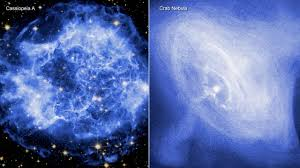
“New movies of two of the most famous objects in the sky—the Crab Nebula and Cassiopeia A—are being released from NASA’s Chandra X-ray Observatory. Each includes X-ray data collected by Chandra over about two decades. They show dramatic changes in the debris and radiation remaining after the explosion of two massive stars in our galaxy. The Crab Nebula, the result of a bright supernova explosion seen by Chinese and other astronomers in the year 1054, is 6,500 light-years from Earth. At its center is a neutron star, a super-dense star produced by the supernova. As it rotates at about 30 times per second, its beam of radiation passes over the Earth every orbit, like a cosmic lighthouse.” (Phys.org)
BLUE ORIGIN: New Shepard’s 25th Mission Includes America’s First Black Astronaut Candidate
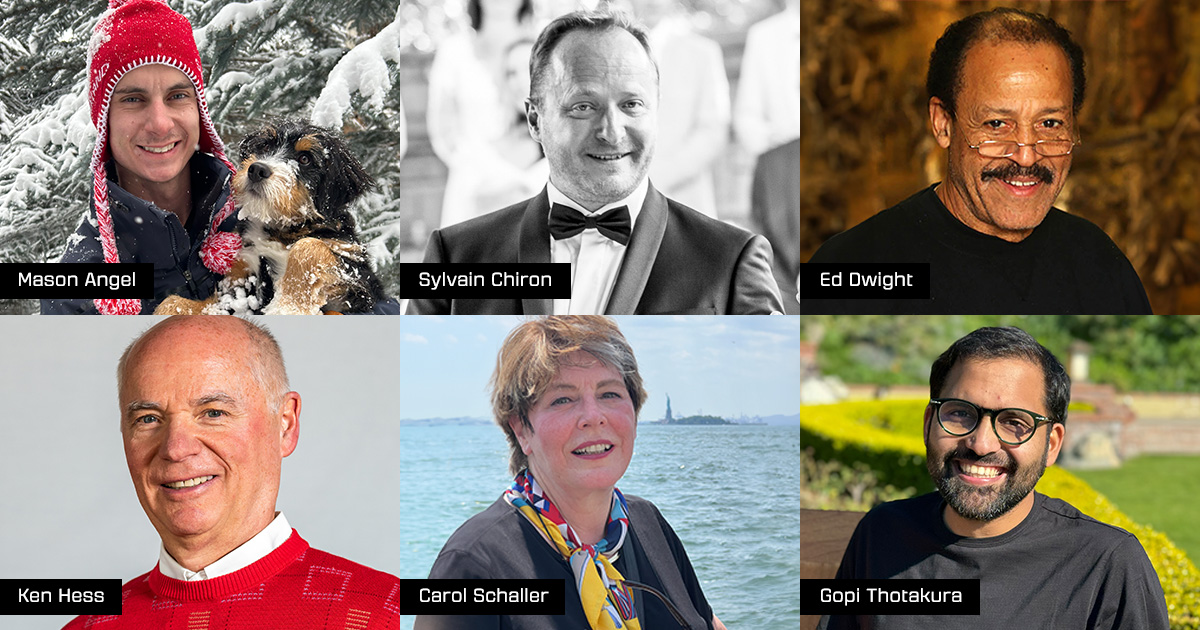

Blue Origin today revealed the six-person crew flying on its NS-25 mission. The crew includes: Mason Angel, Sylvain Chiron, Kenneth L. Hess, Carol Schaller, Gopi Thotakura, and former Air Force Captain Ed Dwight, who was selected by President John F. Kennedy in 1961 as the nation’s first Black astronaut candidate but was never granted the opportunity to fly to space.
This mission will be the seventh human flight for the New Shepard program and the 25th in its history. To date, the program has flown 31 humans above the Kármán line.
Meet the Crew
Ed Dwight
In 1961, Ed was chosen by President John F. Kennedy to enter training at the Aerospace Research Pilot School (ARPS), an elite U.S. Air Force flight training program known as a pathway for entering the NASA Astronaut Corps. In 1963, after successfully completing the ARPS program, Ed was recommended by the U.S. Air Force for the NASA Astronaut Corps but ultimately was not among those selected. He entered private life in 1966 and spent a decade as an entrepreneur before dedicating his life’s work to using sculpture as a medium to tell the story of Black history. He’s spent the last five decades creating large-scale monuments of iconic Black figures, including Dr. Martin Luther King Jr., Frederick Douglass, and Harriet Tubman and the Underground Railroad, among many others. His more than 130 public works are installed in museums and public spaces across the U.S. and Canada. Ed was born in 1933 and raised in Kansas City, KS.
Ed’s seat is sponsored by Space for Humanity, a nonprofit changing global perspectives by democratizing access to space for all of humanity, with additional support from the Jaison and Jamie Robinson Foundation.
Mason Angel
Mason is the founder of Industrious Ventures, a venture capital fund supporting early-stage companies that enable or progress new industrial revolutions. Mason is an active member in his family’s foundation and will use this mission to inspire children and advance partnerships with nonprofits focused on STEM in early education. He spends his free time skiing or hiking in the Rocky Mountains and can often be found with his dog Leo, named for low Earth orbit.
Sylvain Chiron
Sylvain is the founder of the Brasserie Mont Blanc, one of the largest craft breweries in France. Sylvain was born in the French Alps and is a lifelong aviator and skier. He earned his pilot’s license at age 16. After spending several summers in Florida taking additional flying lessons and watching Space Shuttle launches, Sylvain entered mandatory service in the French military, where he served as a ski instructor for the French Air Force and NATO pilots. Following the military, he pursued an international MBA at Temple University and moved to Tokyo to study business in Japan. Sylvain and his family are based in Savoy, France, where he’s also involved in philanthropy focused on children’s education and nature preservation.
Kenneth L. Hess
Ken is a software engineer and entrepreneur who shaped today’s technology-based family history industry when he developed the Family Tree Maker product line in the 1990s. The company was acquired by Ancestry.com in 2003. In 2001, Ken gave back by founding Science Buddies, a K-12 nonprofit created to level the playing field and improve STEM literacy by inspiring students through free, personalized, hands-on projects in all areas of science, including space exploration. Science Buddies has reached one-quarter billion users. Ken’s lifelong passion for space exploration is in his DNA, with numerous early American pioneers in his mother’s lineage and many engineers and technicians in his father’s.
Carol Schaller
Carol is a retired CPA. In 2017, her doctor told her she would likely go blind. She has since traveled to 25 countries around the world, visited Mount Everest Base Camp, trekked to the Bwindi Impenetrable Forest of Uganda to see mountain gorillas, visited the South Pole, and camped in a tent in the desolate Antarctic plain at -20 degrees. Seeing Earth’s thin layer of atmosphere in the blackness of space will fulfill a lifelong dream. Carol and her husband of 40 years live on a farm in Lumberville, PA, with a view of the stars, two cows, 100 chickens, a dog, and a dancing parrot.
Gopi Thotakura
Gopi is a pilot and aviator who learned how to fly before he could drive. He’s co-founder of Preserve Life Corp, a global center for holistic wellness and applied health located near Hartsfield-Jackson Atlanta International Airport. In addition to flying jets commercially, Gopi pilots bush, aerobatic, and seaplanes, as well as gliders and hot air balloons, and has served as an international medical jet pilot. A lifelong traveler, his most recent adventure took him to the summit of Mt. Kilimanjaro. Gopi is a graduate of Embry-Riddle Aeronautical University.
Each astronaut will carry a postcard to space on behalf of Blue Origin’s foundation, Club for the Future. This program gives students access to space on Blue Origin’s rockets, including an all-digital method to create and send postcards, which can be found here. The Club’s mission is to inspire and mobilize future generations to pursue careers in STEAM for the benefit of Earth.
From an environmental standpoint, nearly 99% of New Shepard’s dry mass is reused, including the booster, capsule, engine, landing gear, and parachutes. New Shepard’s engine is fueled by highly efficient liquid oxygen and hydrogen. During flight, the only byproduct is water vapor with no carbon emissions.
The flight date will be announced soon.
Credit: Blue Origin